
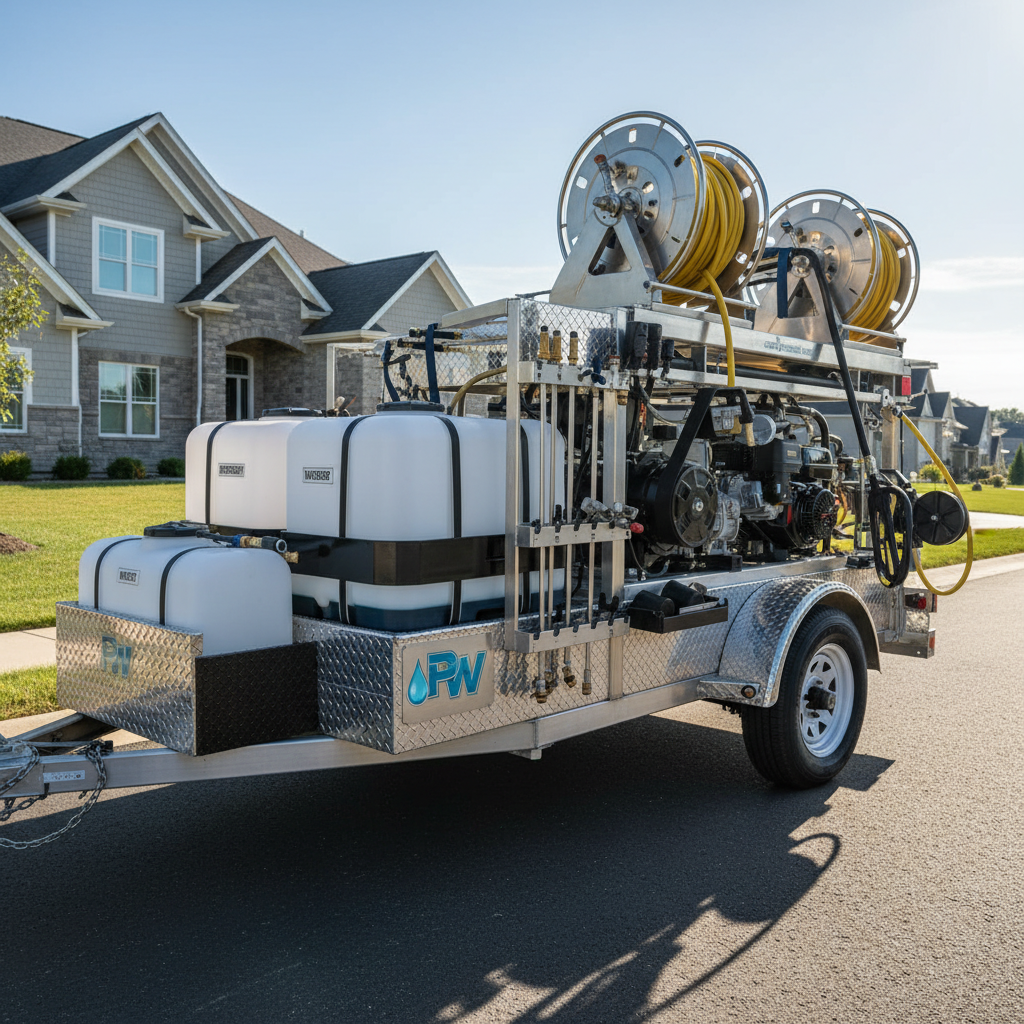
Pressure washing is an invaluable service for property owners and businesses alike. But as a pressure washing professional, you've probably wondered whether investing in a hot water pressure washer is worth the money. The short answer is: it depends on your business model and typical jobs. Let's explore the pros and cons to help you make an informed decision.
What's the Difference Between Hot and Cold Water Pressure Washers?
The main difference is obvious—hot water washers heat the water before it comes out of the nozzle. This heated water can be 4-5 times more effective at dissolving grease, oils, and stubborn stains compared to cold water alone.
Hot water units are typically powered by diesel, gasoline, or electric heaters integrated into or attached to the pressure washer. They range from 140°F to 330°F, with most professionals using 180-200°F for most jobs.
When Hot Water Is Worth It
Hot water becomes essential for specific types of jobs:
- Grease removal: Kitchens, auto shops, and restaurants require hot water to cut through grease effectively
- Industrial cleaning: Manufacturing plants, equipment cleaning, and commercial facilities often need hot water
- Tough stains: Stubborn oils, tar, and adhesive residue dissolve much faster in hot water
- Winter cleaning: Hot water is more effective in cold temperatures when cold water becomes even less effective
- Premium pricing: Hot water services command 20-30% higher rates
The Cost Factor
Hot water pressure washers typically cost $3,000-$8,000 more than equivalent cold water units. For a business just starting out, this is significant capital investment.
However, consider the return on investment:
- Premium services charge $150-$400/hour vs. $80-$150/hour for standard cold water work
- Job completion time can be 40-60% faster with hot water
- Customer satisfaction increases dramatically for grease and oil removal jobs
Operational Costs
Hot water units cost more to operate. Fuel costs are higher due to the heating element, and maintenance can be more complex. Budget for:
- Fuel costs: 30-50% higher than cold water units
- Routine maintenance: Oil changes, filter replacements more frequent
- Repairs: Heating elements and thermostats may need replacement
- Storage: Hot water units take up more space
Which Type of Business Benefits Most?
Hot water is essential if you focus on:
- Commercial kitchen cleaning
- Auto detailing
- Industrial facility cleaning
- Equipment cleaning services
- Grease trap cleaning
Cold water is sufficient for:
- Residential house washing
- Deck and patio cleaning
- Driveway cleaning
- Gutter cleaning
- Most general cleaning tasks
Hybrid Approach: The Smart Strategy
Many successful pressure washing businesses use a hybrid approach:
- Start with a quality cold water unit for general residential work
- Add a hot water unit as demand for specialty services grows
- Offer both services to maximize revenue per customer
- Use hot water primarily for high-margin commercial jobs
This approach lets you build your business gradually while testing the market demand for hot water services in your area.
Consider These Factors
Before investing in hot water equipment, honestly assess:
- Market demand: Are there enough commercial/industrial jobs in your area?
- Current workload: Can you keep equipment busy year-round?
- Capital available: Can you afford the investment without straining cash flow?
- Competition: Do competitors in your area offer hot water services?
- Customer base: Will your current customers pay premium rates for hot water cleaning?
Making the Decision
Hot water pressure washers are definitely worth the investment—IF you have the demand and capital. For businesses focusing on residential or light commercial work, starting cold and upgrading later is perfectly sensible.
The key is understanding your market. Survey potential customers, talk to other local pressure washing businesses, and run the numbers. If 30% or more of your leads need hot water cleaning, it's time to invest. Otherwise, focus on perfecting cold water services first and add hot water once you've built a profitable base.