
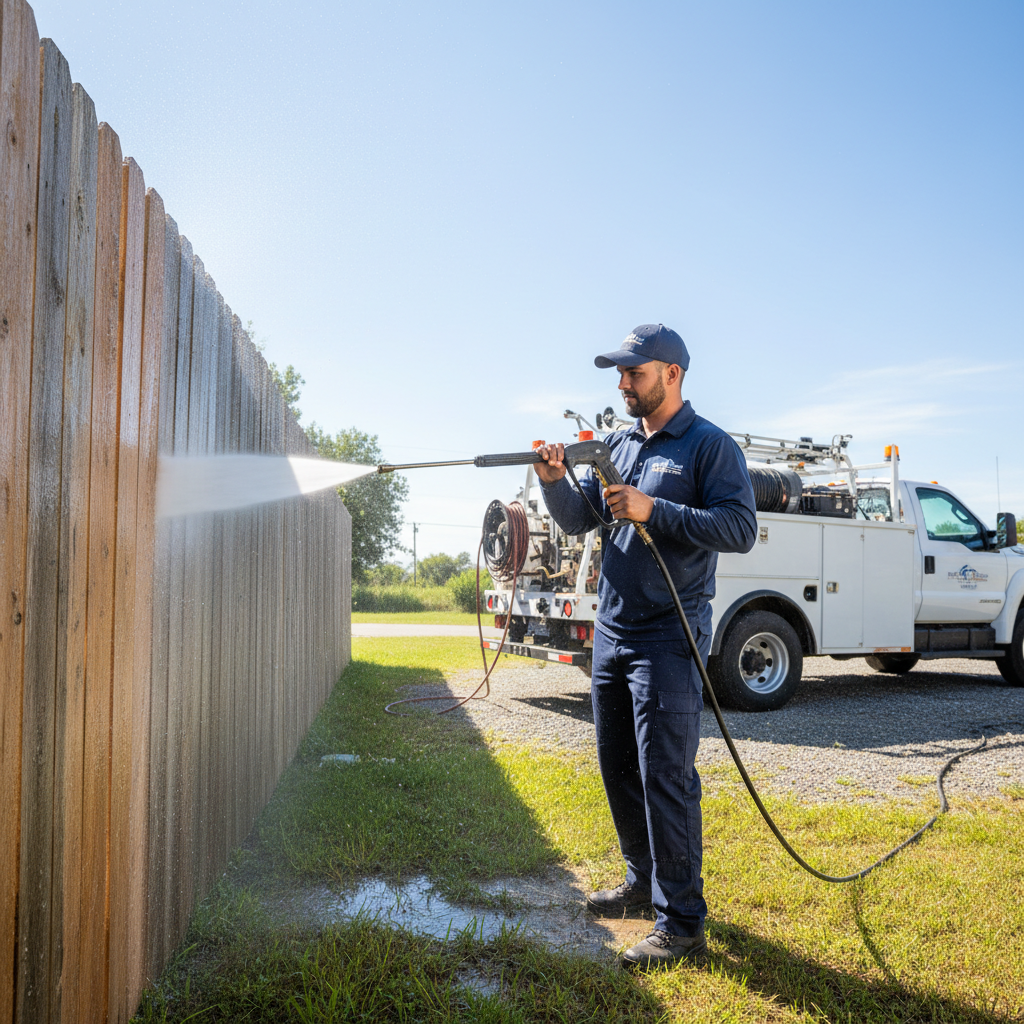
Fences are one of the most pressure-washed surfaces, but they're also among the most vulnerable to damage. Learn the exact PSI settings and techniques that professional cleaners use to restore fences without splintering, warping, or creating bare spots.
Understanding Wood Fence Pressure Washing Fundamentals
Wood fences require a completely different approach than concrete or brick. The key is using low pressure—typically 500-1500 PSI—with a wide spray pattern to distribute force evenly. Use a 25-40 degree nozzle and always wash parallel to the grain. Allow 48 hours drying time before applying sealant.
Choosing the Right Pressure Setting
- Start at 1000 PSI for treated wood
- Test in inconspicuous area first
- Never exceed 1500 PSI on wood
- Use 25-40 degree fan nozzles
Step-by-Step Fence Washing Process
Step 1: Pre-soak the fence with a wood-safe detergent (sodium hypochlorite at 0.5-1% concentration). Step 2: Let dwell for 5-10 minutes. Step 3: Rinse from top to bottom at 1000-1200 PSI. Step 4: Apply wood brightener if needed. Step 5: Allow complete drying before sealing.
Pro Tips
- Use downstream injection for chemical application
- Protect plants with plastic sheeting
- Check fence for rot before washing
- Apply wood sealer within 2 weeks
Frequently Asked Questions
What PSI should I use on a wood fence?
Use 500-1500 PSI with a 25-40 degree nozzle. Soft, weathered wood needs the lower end; treated lumber can handle up to 1500 PSI.
Can pressure washing damage a fence?
Yes, if you use too much pressure or the wrong nozzle. Always start low and test a small area first.
How often should I pressure wash my fence?
Every 1-2 years for most wood fences. More often in humid climates where mold and mildew grow quickly.
Do I need to seal after pressure washing?
Yes, sealing within 1-2 weeks protects wood from moisture penetration and UV damage.
What detergent works best on fences?
Sodium hypochlorite (bleach) diluted to 0.5-1% is effective for mold and algae. Oxalic acid works for rust stains.
Ready to Look Professional on Every Job?
Whether you're washing fences or full home exteriors, your crew's appearance matters as much as the work. Get custom branded shirts, hats, and workwear at PrintFrenz.com — built tough for pressure washing professionals.