
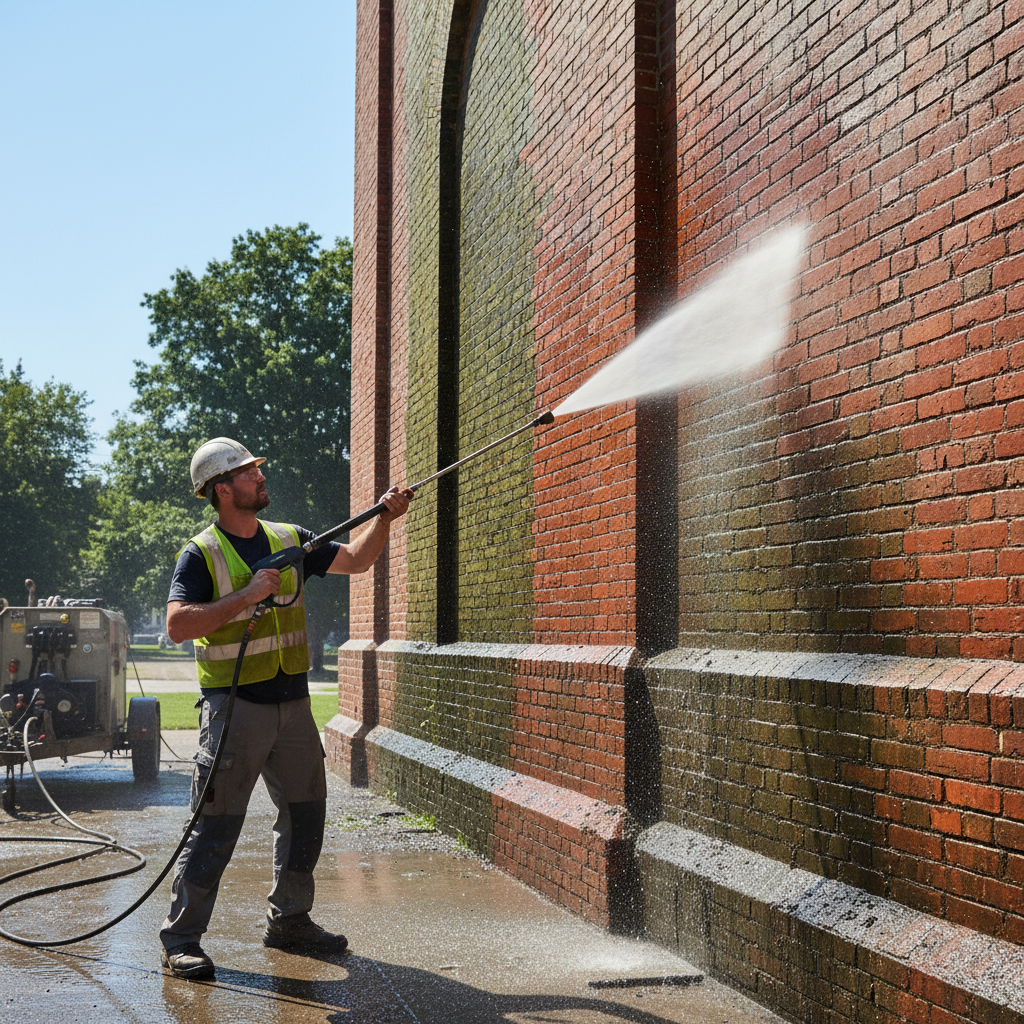
Brick is durable but porous, making it vulnerable to damage from improper pressure washing. Professional brick cleaners know exactly how to restore mortar and masonry without causing costly damage.
Brick Composition and Pressure Washing Safety
Brick's fired clay composition makes it harder than concrete but more vulnerable to water damage if pressure is applied incorrectly. Old mortar (pre-1950s) is often softer than modern mortar and crumbles easily under high pressure. The rule of thumb: use 1000-1500 PSI maximum for brick, 25-40 degree nozzles, and always maintain 12+ inches distance from the surface. Water can penetrate mortar joints and damage interior walls through capillary action, so pressure washing should always be done with proper drainage and in dry climates or clear conditions. Never pressure wash brick during or immediately before rain. High-pressure water can wash out old mortar from joints, creating structural issues that are expensive to repair.
Pressure Settings by Brick Age
- Historic brick (pre-1950): 500-1000 PSI
- Standard modern brick: 1000-1500 PSI
- Decorative brick: test first at low pressure
- Never exceed 1500 PSI
Nozzle and Distance Protocol
- Use 25-40 degree fan nozzles
- Maintain 12-18 inches distance
- Test on inconspicuous area first
- Use overlapping passes at 45-degree angle
Cleaning Solutions for Brick Facades
Chemical cleaning is often more effective and safer than pressure washing alone. A mild alkaline cleaner lifts dirt and moss without damaging brick. For stubborn algae and lichen, apply a biodegradable cleaner and let it work for 15-20 minutes before rinsing. Efflorescence—white mineral deposits common on new or recently sealed brick—responds well to acidic cleaners, but use weak solutions (pH 4-5) to avoid mortar damage. Never use muriatic acid (hydrochloric acid) on brick unless you're a trained professional; improper application can cause severe damage. For paint removal, specialized brick cleaners work better than pressure alone. Pre-wet the brick, apply cleaner, let it sit, then rinse gently. Most professional brick cleaning combines low pressure with chemistry rather than relying on pressure alone.
Cleaner Selection by Stain Type
- Dirt/algae: alkaline cleaner
- Efflorescence: mild acid cleaner (pH 4-5)
- Paint overspray: specialized paint remover
- Mold/mildew: fungicide cleaner
Protecting Mortar and Grout During Cleaning
Mortar joint protection is critical. Before cleaning, inspect joints for loose mortar—if you see significant deterioration, recommend repointing before pressure washing. Shield areas with plastic sheeting if possible, especially around doors and windows where water infiltration causes interior damage. Use a gentle spray pattern on joints rather than directing full pressure at them. Many professionals use soft-bristle brushes for spot cleaning instead of pressure washing entire brick facades. After cleaning, water that's absorbed into brick will take 2-4 weeks to fully dry, especially if protected by a roof overhang. Some staining and discoloration can occur during this drying period as mineral deposits migrate to the surface—this is temporary and typically invisible after final drying.
Mortar Joint Care
- Inspect for deterioration before cleaning
- Avoid high pressure directly on joints
- Use soft brush for delicate areas
- Allow extended drying time after cleaning
Pro Tips from Industry Veterans
- Pre-wet brick before applying cleaner
- Never use muriatic acid without professional training
- Allow 2-4 weeks for brick to fully dry after cleaning
Frequently Asked Questions
What makes professional pressure cleaning different from DIY?
Professionals have specialized equipment, training, and experience with problem-solving. This expertise prevents costly mistakes and delivers superior results.
How much does pressure cleaning cost?
Pricing varies based on surface size, condition, and complexity. Contact local professionals for estimates specific to your project.
How often should pressure be cleaned?
Most exterior surfaces benefit from annual or semi-annual professional cleaning. Commercial properties may need more frequent maintenance.
Can pressure washing damage my surfaces?
Improper technique or excessive pressure can damage surfaces. Professional operators understand surface-specific requirements and adjust accordingly.
Is professional pressure cleaning worth the investment?
Yes. Professional cleaning extends surface lifespan, maintains appearance, prevents damage, and protects your property value over time.
Ready to Look Professional on Every Job?
Your team's appearance directly impacts customer perception and trust. At PrintFrenz.com, we specialize in custom branded workwear for pressure washing and exterior cleaning businesses. From bleach-resistant shirts to moisture-wicking crew wear, we design apparel that stands up to the demands of your industry while making your team look professional on every job site. Invest in quality uniforms that boost customer confidence, improve crew morale, and create lasting brand recognition. Visit PrintFrenz.com today to explore custom workwear options designed specifically for service professionals like you.