
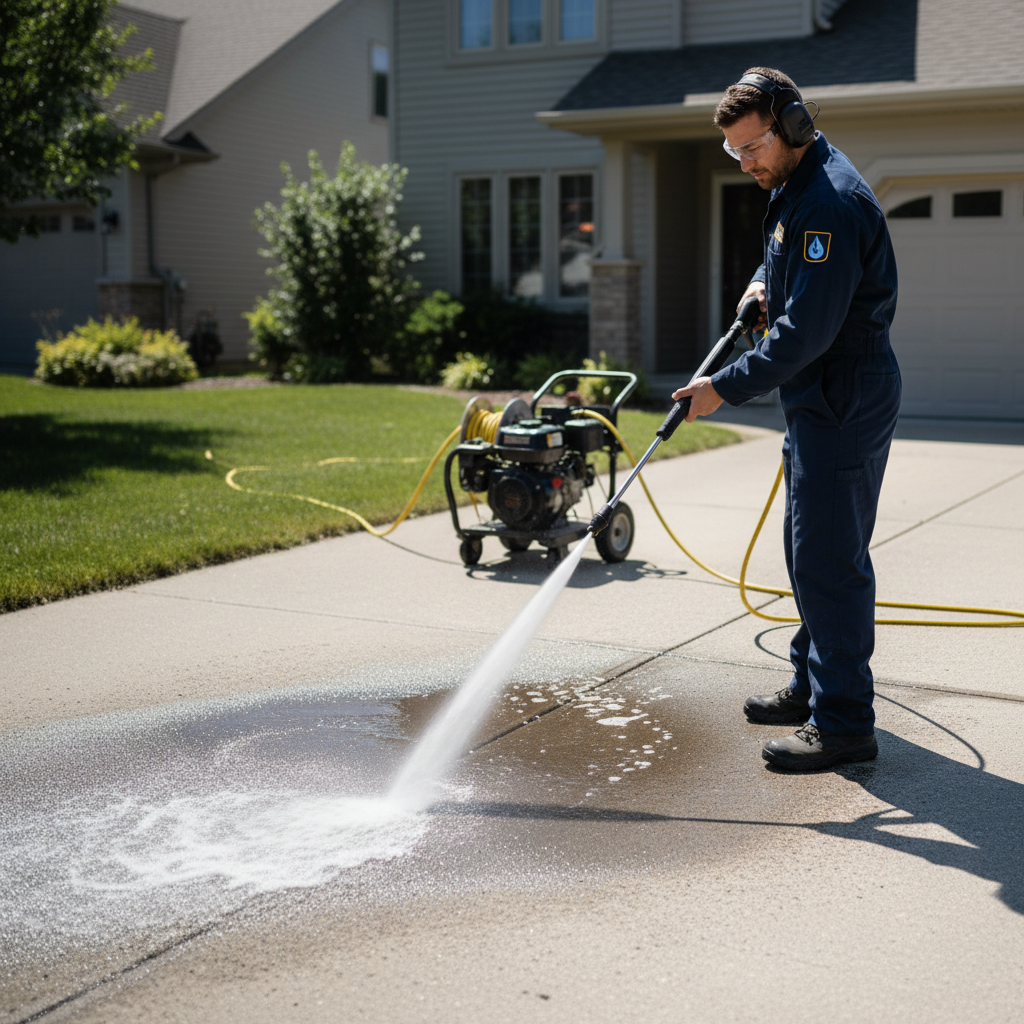
One of the biggest mistakes pressure washing business owners make is underpricing their services. Many new entrepreneurs charge too little to stay competitive, but this leaves money on the table and creates unsustainable business models. In 2026, understanding how to price your pressure washing services correctly is essential for profitability and growth.
1. Calculate Your True Costs
Before setting prices, understand all your business costs:
- Equipment and fuel: Pressure washers, surface cleaners, water systems, and fuel add significant ongoing costs. Factor in maintenance and replacement.
- Transportation: Vehicle payment, insurance, maintenance, and gas for traveling between jobs.
- Labor: Your time (minimum wage equivalent) plus employee wages, payroll taxes, and workers compensation.
- Insurance: General liability, equipment, and vehicle insurance are non-negotiable.
- Marketing: Website, advertising, uniforms with logos, and vehicle wraps.
- Overhead: Business licenses, permits, phone, software, office supplies.
A good rule of thumb: your costs (direct and indirect) should not exceed 50% of your revenue. If they do, your pricing is too low.
2. Understand Different Pricing Models
There are several ways to price pressure washing services:
Hourly Rate
Charge by the hour ($50-$150+ per hour depending on location and complexity). This works for jobs where duration is unpredictable but can undervalue quick, high-value jobs.
Per-Square-Foot Pricing
Charge by area ($0.05-$0.25+ per square foot depending on service). This is popular for driveway, patio, and house washing. It scales with job size and is easy for customers to understand.
Flat-Rate/Project Pricing
Charge a fixed price per job ($150-$1,000+). This works well for standardized jobs like driveway cleaning or fence washing. It rewards efficiency and allows for faster estimates.
Value-Based Pricing
Charge based on the value you provide to the customer (curb appeal, property value increase, etc.). This is the most profitable approach but requires selling the value, not just the service.
3. Research Your Local Market
Prices vary dramatically by region. Urban areas and affluent neighborhoods command higher rates than rural areas. Call local competitors, get quotes, and study what established businesses charge. Don't undercut based on price alone—focus on value and quality instead.
4. Price by Service Type
Different services have different profit margins:
- Driveway cleaning: $150-$400 (commodity service, lower margins)
- House exterior washing: $300-$800 (moderate margins, high volume)
- Roof soft-washing: $500-$2,000+ (premium service, higher margins)
- Commercial building facades: $1,000-$5,000+ (high-value contracts)
- Parking lot cleaning: $500-$2,000+ (recurring revenue potential)
- Graffiti removal: $200-$800+ (specialty work commands premium pricing)
5. Price Premium Services Higher
Don't charge the same for a driveway as a delicate stone surface. Specialty services like solar panel cleaning, roof soft-washing, or historical property restoration justify premium pricing. These services require more skill, equipment, and liability, so charge accordingly.
6. Build in Profit Margin
Your pricing should achieve these margins:
- Solo operation: 50-60% gross margin (50% costs, 10% profit)
- Small crew (2-3 employees): 40-50% gross margin
- Growing business (4+ employees): 30-40% gross margin
These margins account for taxes, equipment replacement, marketing, and unexpected expenses.
7. Don't Compete on Price Alone
The cheapest provider rarely wins long-term. Instead, compete on:
- Quality: Do exceptional work that customers rave about and refer.
- Professionalism: Your crew's appearance, uniforms, and customer service matter. Branded uniforms from PrintFrenz signal professionalism.
- Reliability: Show up on time, communicate clearly, and follow through on promises.
- Experience: Highlight certifications, years in business, and specialized expertise.
- Guarantees: Offer satisfaction guarantees or warranties on your work.
8. Test and Adjust
Pricing isn't fixed. Test higher prices on new services, gauge customer response, and adjust. Many businesses discover they can charge more without losing customers—customers care more about quality and professionalism than penny-saving discounts.
Conclusion
Proper pricing is the foundation of a sustainable, profitable pressure washing business. Calculate your costs, understand your market, and price based on value—not just competition. Remember, customers who choose based purely on price are often the most difficult, while customers who value quality and professionalism become loyal, repeat clients.
Professional presentation matters in sales, and your crew's appearance plays a big role in how customers perceive your business. Invest in branded workwear from PrintFrenz to reinforce the professional image that justifies your premium pricing.