
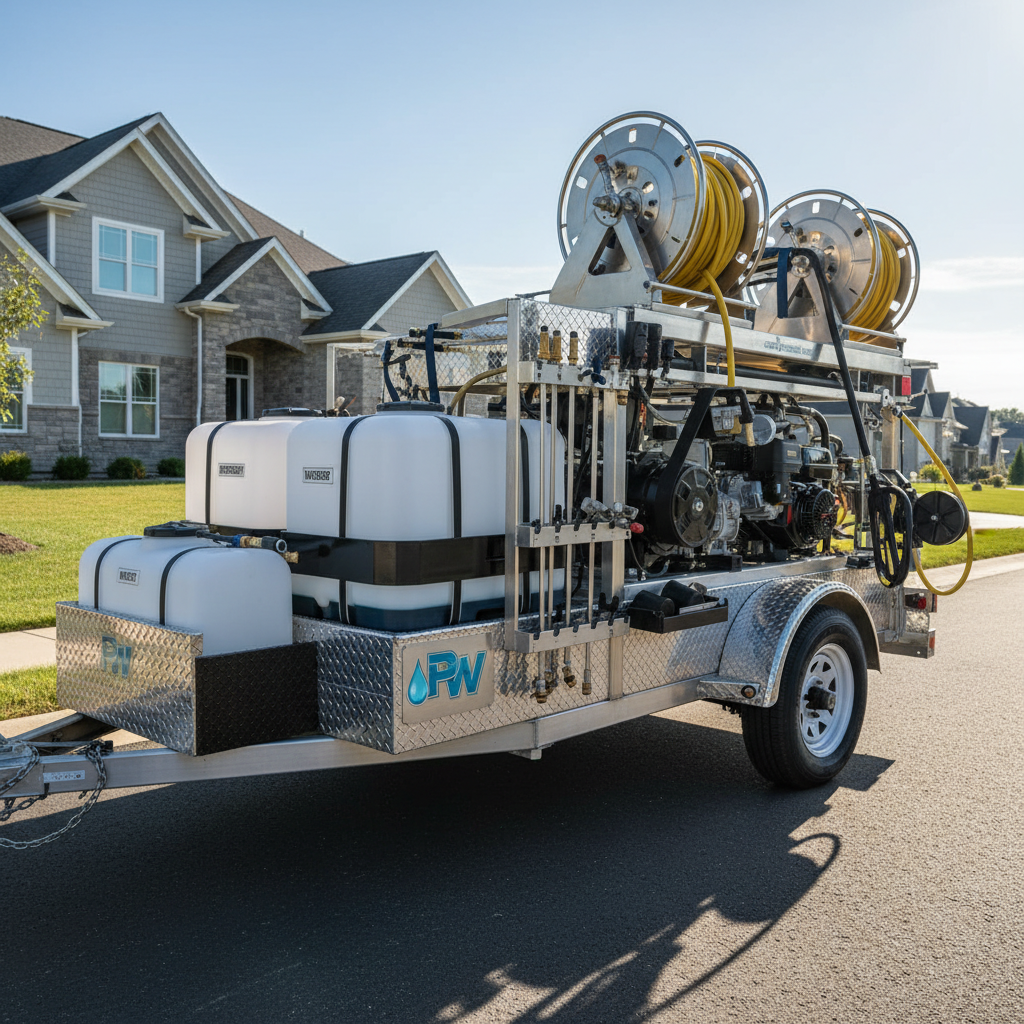
If you're serious about pressure washing, having the right trailer setup is essential. A well-organized pressure washing trailer can improve efficiency, increase safety, and create a professional impression with your customers. In this guide, we'll walk through everything you need to know about building the ultimate pressure washing rig.
Why Your Trailer Setup Matters
Your trailer is more than just a way to transport equipment—it's a mobile billboard for your business. When customers see your rig roll up, they immediately form opinions about your professionalism and reliability. A clean, organized trailer with visible branding signals that you're a serious operator.
Beyond appearances, the right setup saves you time and frustration on every job. When everything has its place, you spend less time searching for tools and more time working.
Trailer Size and Type Considerations
Most pressure washing operators start with a 6x12 or 6x14 enclosed trailer. This size offers plenty of space without being so large that it's difficult to maneuver in residential neighborhoods.
Consider these factors when choosing your trailer:
- Weight capacity: Make sure your vehicle can tow the full loaded weight
- Electrical needs: Plan for 110V and 220V outlets
- Water access: Design for easy hose routing and tank filling
- Interior height: Ensure you can stand upright while working inside
Essential Pressure Washer Mounting
Your pressure washer should be securely fastened to prevent shifting during transport. Most operators mount units toward the front of the trailer on a reinforced platform. Use heavy-duty straps or chains to secure the unit, and ensure the engine exhaust points toward the back of the trailer.
Leave adequate space behind the pressure washer for hose storage and coil up. A good rule of thumb is to have at least 8 feet of clearance behind your unit.
Water Tank Setup
A fresh water tank lets you work without depending on external water sources. Most operators use 300-500 gallon tanks mounted low and toward the back of the trailer for proper weight distribution.
Invest in:
- A quality submersible pump (2-3 GPM)
- Filtration system to keep sediment out of your pump
- Easy fill access, ideally with a strainer
- Drain plug for winter maintenance
Hose and Equipment Organization
Organize your hoses, wands, and nozzles in dedicated storage. Many operators use:
- Wall-mounted hose reels for pressure hoses
- Compartments or bins for wands and nozzles
- Pegboards for small tools and supplies
- Shelving for detergents and cleaning supplies
Color-coding hoses helps prevent mix-ups on the job. Use one color for water intake and a different color for wastewater discharge.
Fuel and Safety Considerations
If you have a gas-powered washer, ensure proper fuel storage. Keep fuel in approved red cans away from the engine and electronics. Never overfill fuel tanks, and always vent the fuel tank before transport.
Install a fire extinguisher in an easily accessible location. A 10-20 pound ABC extinguisher is sufficient for most mobile operations.
Electrical and Lighting
A properly wired trailer makes your operation safer and more professional. Install:
- Dual 110V/220V outlets near the pressure washer
- LED lighting inside the trailer
- Exterior lights for safety and visibility
- A power distribution panel with circuit breakers
Hire a professional electrician to handle trailer electrical work. Proper grounding and GFCI protection are essential.
Branding and Professional Appearance
Your trailer is moving advertising. Paint or wrap it with your company colors, logo, and contact information. A vinyl wrap is more durable than paint and can be updated if you rebrand.
Keep your trailer clean and well-maintained. A dirty, disorganized trailer suggests sloppy work to potential customers.
Maintenance and Seasonal Prep
Inspect your trailer regularly for:
- Rust or corrosion
- Tire condition and pressure
- Light and electrical function
- Hose cracks or leaks
- Pump and engine condition
Before winter, drain all water tanks and lines to prevent freeze damage. Disconnect the battery on gas equipment.
Budget Considerations
A complete pressure washing trailer setup can range from $3,000 to $8,000 depending on equipment quality and trailer size. Start with essentials and add features as your business grows.
Remember that your trailer is an investment in your business's professional image and operational efficiency. Taking time to build it right pays dividends for years to come.